I am Govinda Finn. Welcome to Gateway to Japan. In this series, we explore the major changes shaping Japan’s economy and examine the themes that matter most to global investors.
Our topic this time is: “Have corporate mindsets changed in Japan?”
For decades, Japan was characterised as a market where companies prioritised stability over growth, maintained large cash balances and placed less emphasis on shareholder returns than their global peers.
Today, however, that perception is being challenged. Rising inflation, wage growth, the normalisation of interest rates and ongoing corporate governance reforms are encouraging Japanese companies to rethink how they allocate capital, invest for growth and create value for shareholders.
While not all companies are evolving at the same pace, a growing number are demonstrating a stronger focus on profitability, capital efficiency and long-term competitiveness. As these changes unfold, a key question for investors is not whether Japan is changing, but which companies are best positioned to benefit from that change?
To find the answer, I sat down with Katsunori Ogawa, a portfolio manager with nearly 30 years of experience investing in Japanese equities. We discussed how corporate Japan is changing, where future investment opportunities may emerge, and why active management will become increasingly relevant in the years ahead.
Speaker Profiles

Govinda Finn (Interviewer)
Govinda Finn is a Visiting Professor at Tokyo Metropolitan University and serves as an Advisor to Sumitomo Mitsui Trust Asset Management. Previously, he worked at Aberdeen Investments as an Economist covering Japan and developed Asian economies. He is also a member of the International Advisory Board of the Asia Scotland Institute.
He earned a Ph.D. from the Graduate School of Economics at Kobe University and was a recipient of the Japan Science and Technology Agency (JST) “Next-Generation Pioneering Research Program” scholarship. He also holds a master’s degree from the School of Oriental and African Studies (SOAS), University of London, and a bachelor’s degree from the University of Leeds. During his undergraduate studies, he spent one year at the Darla Moore School of Business at the University of South Carolina. He also holds an investment management qualification.

Katsunori Ogawa
Chief Portfolio Manager for Sakigake High Alpha Strategy (Interviewee)
Katsunori Ogawa joined SuMi TRUST AM in 1994 and started his asset management career as a client relationship manager for public pension funds in 1997. In 2003, he launched the Sakigake original strategy and has been leading the portfolio management team since then. In 2013, he launched the Sakigake High Alpha strategy as a concentrated version of the Sakigake Original strategy.
His efforts have honoured our company with the Japan Best Equity Manager award at the Asia Asset Management Country Awards for seven consecutive years, from 2020 to 2026. He received a BA in economics from Keio University. He is a Certified Member Analyst of the Securities Analysts Association of Japan (CMA) and a Certified International Investment Analyst (CIIA).
Volume 3: Summary
Japan is entering a new phase of economic and corporate transformation. For decades, many Japanese companies were characterised by conservative management practices, large cash balances and a limited focus on shareholder returns. Today, a combination of inflation, wage growth, interest rate normalisation and corporate governance reforms is driving a significant shift in management behaviour.
According to Katsunori Ogawa, Chief Portfolio Manager at SuMi TRUST AM, the most important change is the transition from capital preservation to value creation. While the pace of change differs across companies, an increasing number of management teams are placing greater emphasis on capital efficiency, profitability and long-term growth. As a result, the gap between winners and losers is likely to widen, making company selection increasingly important.
Against this backdrop, opportunities are emerging in areas where Japanese companies possess unique competitive advantages. Japan remains a global leader in semiconductor equipment, materials and specialised electronic components, positioning many companies as critical enablers of AI and digitalisation. Beyond technology, the global expansion of Japanese intellectual property, including anime, games and other content businesses, represents another attractive structural growth opportunity.
However, identifying attractive themes alone is not sufficient. The key challenge for investors is determining which companies can transform favourable industry trends into sustainable earnings growth. Competitive positioning, barriers to entry, management quality and valuation remain critical considerations.
SuMi TRUST AM addresses this challenge through a cross-sector research framework that combines the expertise of approximately 20 analysts with portfolio managers' broader perspective. By connecting insights across industries and supply chains, the team seeks to identify changes in corporate competitiveness before they are fully reflected in financial results or market expectations.
As Japan's corporate transformation continues, active management may become increasingly valuable. The opportunity is no longer simply to invest in Japan, but to identify the companies best positioned to benefit from the country's evolving economic and corporate landscape.

Step 1: A Changing Japan
— A number of changes are taking place simultaneously in Japan. At a company level, what do you consider to be the most significant change?
The most significant change, in our view, is the shift in management mindset from preservation to value creation.
Historically, many Japanese companies prioritised stability and capital preservation, often maintaining large cash balances and taking a cautious approach to capital allocation. Today, however, management teams are increasingly focused on improving corporate value.
We are seeing a growing emphasis on capital efficiency, the cost of capital and shareholder value. The quality of dialogue between companies and investors has also improved significantly. As a result, an increasing number of companies are taking concrete steps to enhance corporate value through growth investment, share buybacks and business portfolio reforms, alongside greater investment in their employees.
However, not all companies are changing at the same pace. Even within the same industry, a gap is emerging between companies that are actively reforming their business portfolios and investing for future growth, and those that remain tied to traditional management practices.
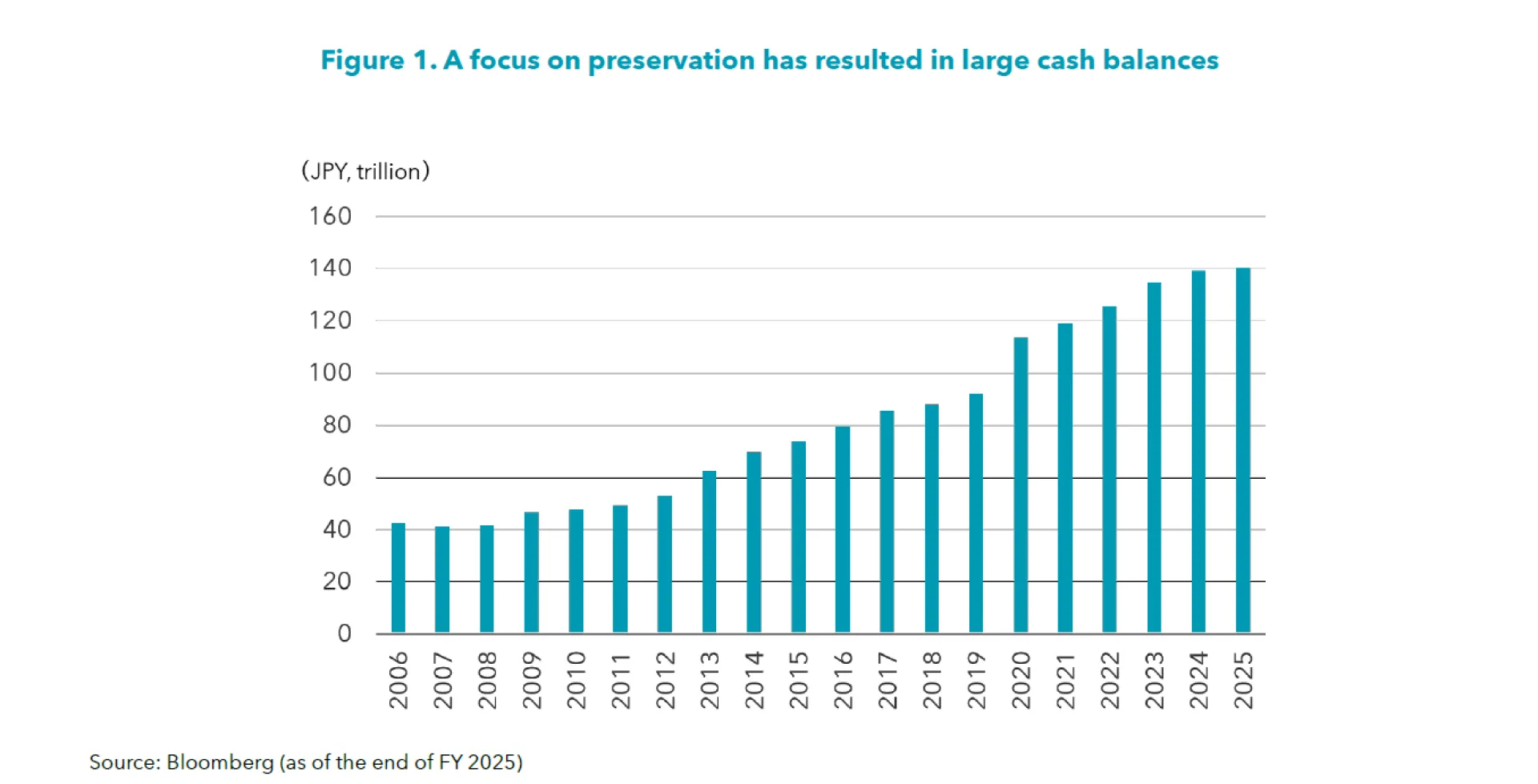
We expect this divergence in competitiveness and profitability to become increasingly apparent over time, making company-specific factors more important for investors.
— Global investors have become highly concentrated in the US, particularly in large technology companies. How do you expect the competitive landscape in Japan to evolve?
At present, we do not see evidence of high concentration risk in Japan. Many industries are characterised by a large number of participants, and historically the environment has not been particularly conducive to large-scale consolidation or M&A.
However, as interest rates normalise and the cost of capital becomes more relevant to corporate decision-making, companies with weaker profitability may face increasing pressure to restructure, consolidate or exit certain businesses.
Competitively positioned companies, on the other hand, may be able to strengthen their market positions and capture a greater share of industry profits.
Over time, these developments could reshape competitive dynamics across Japanese industries. We believe that understanding which companies can sustain their competitive advantages and translate them into earnings growth will become increasingly important for investors.
Step 2: Where the Winners May Emerge
— What do you see as the competitive strengths that are particularly distinctive to Japanese companies?
One of the distinctive strengths of many leading Japanese companies is their approach to research and development (R&D), particularly their ability to accumulate knowledge and expertise through long-term investment in fundamental research.
Meaningful results from R&D do not always emerge within a short period. Maintaining investment in projects where outcomes are uncertain requires patience and long-term commitment.
Some Japanese companies have demonstrated a willingness to pursue fundamental research without focusing solely on short-term profitability. Although the benefits of such investments may take years to materialise, they can create technological capabilities and barriers to entry that support sustainable competitive advantages and long-term returns on capital.
Technological innovation rarely emerges overnight. It is often the result of years of accumulated research, experimentation and incremental improvement. We believe this accumulated expertise underpins the competitive advantages of many Japanese companies and helps explain their leading positions in highly specialised industries.
As Japanese companies place greater emphasis on capital efficiency, we believe those that can combine their accumulated technological expertise with more disciplined capital allocation will be particularly well positioned to strengthen their competitiveness and create long-term value.
— What opportunities do you see for Japanese companies in global growth sectors such as AI and semiconductors?
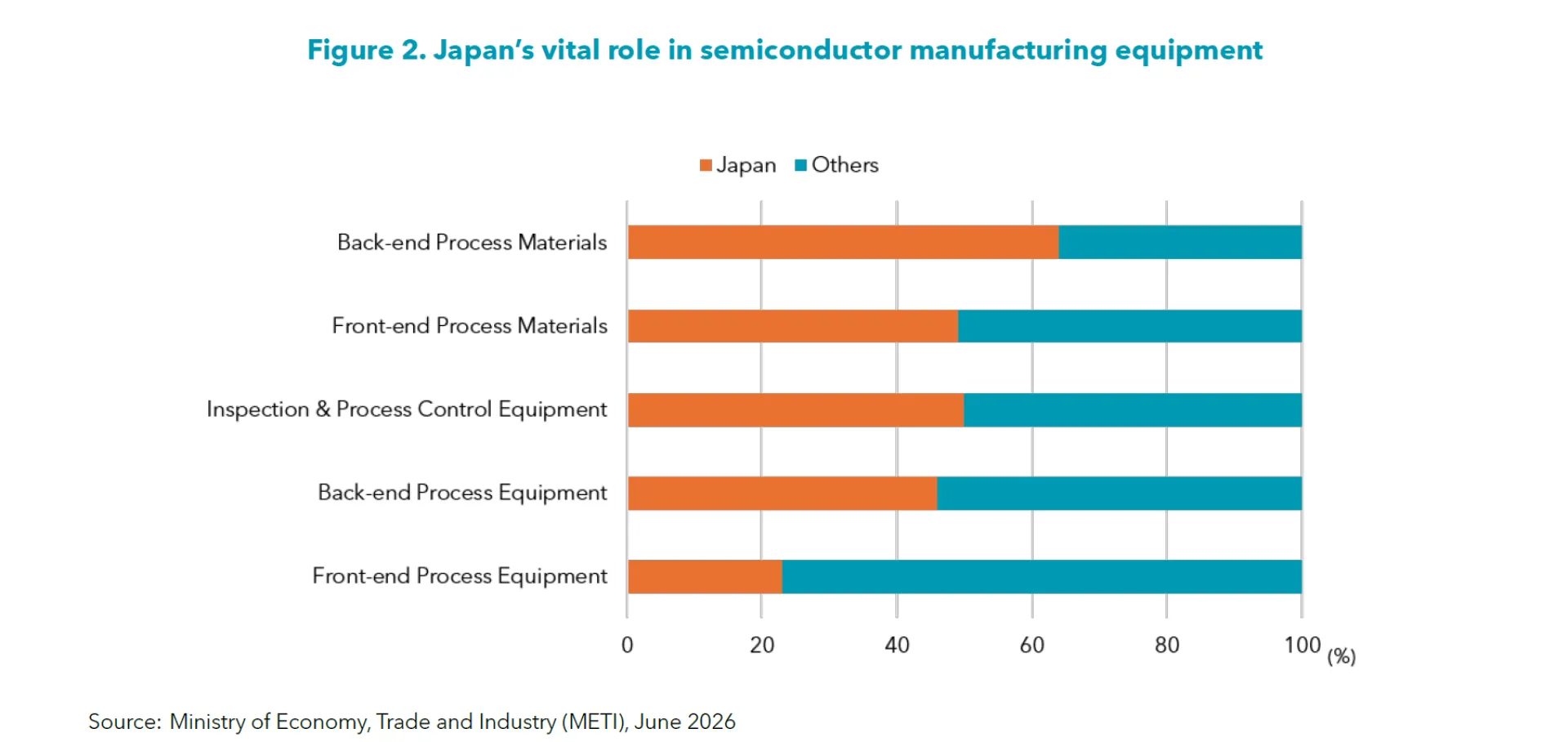
Japanese companies play a vital role in the upstream segments of many global growth industries, particularly in semiconductor and AI-related supply chains.
Japan is home to companies with world-leading positions in semiconductor manufacturing equipment, materials and high-performance electronic components. Their competitive advantages have been built through decades of technological expertise, manufacturing know-how and close relationships with customers.
When considering AI, we believe it is important to look beyond software and platform providers to the broader ecosystem that supports AI adoption. This includes semiconductors, manufacturing equipment, electronic components and data centre-related technologies, where Japanese companies occupy important positions in global supply chains.
As AI adoption expands, opportunities may extend beyond a small number of technology companies to businesses providing the specialised technologies and materials required to support that growth. Beyond infrastructure, the adoption of AI across industries could also create new opportunities for Japanese companies. From improving manufacturing productivity to enhancing demand forecasting in retail and operational efficiency in services, AI has the potential to support earnings growth across a broader range of sectors, including software and IT services.
— Beyond manufacturing and technology, are there other growth themes in Japan that you find particularly interesting?
Japan is traditionally associated with strength in manufacturing, but intellectual property (IP) and content businesses, including anime and games, have emerged as attractive areas of growth.
Japanese content enjoys strong global recognition, while the expansion of digital distribution has created new opportunities to reach overseas audiences. Companies that were once viewed primarily as domestic businesses are increasingly developing models that can generate recurring revenue from global fan bases.
Importantly, successful content businesses are not dependent on a single hit title. Strong intellectual property can be monetised through multiple channels, including streaming, licensing, merchandising, gaming and live events, creating recurring and long-term revenue opportunities. Companies that can consistently develop, manage and monetise strong IP portfolios may be well positioned to generate sustainable earnings and long-term cash flows.
As generative AI makes content production more efficient, we believe the value of distinctive original IP could become even more important. In a world where content is increasingly abundant, companies with unique characters, compelling stories and established global fan communities may enjoy stronger competitive advantages.
We refer to these distinctive Japanese strengths as ‘Japan Original’. We believe that content and services originating in Japan, with the potential to expand globally, offer significant long-term growth opportunities.
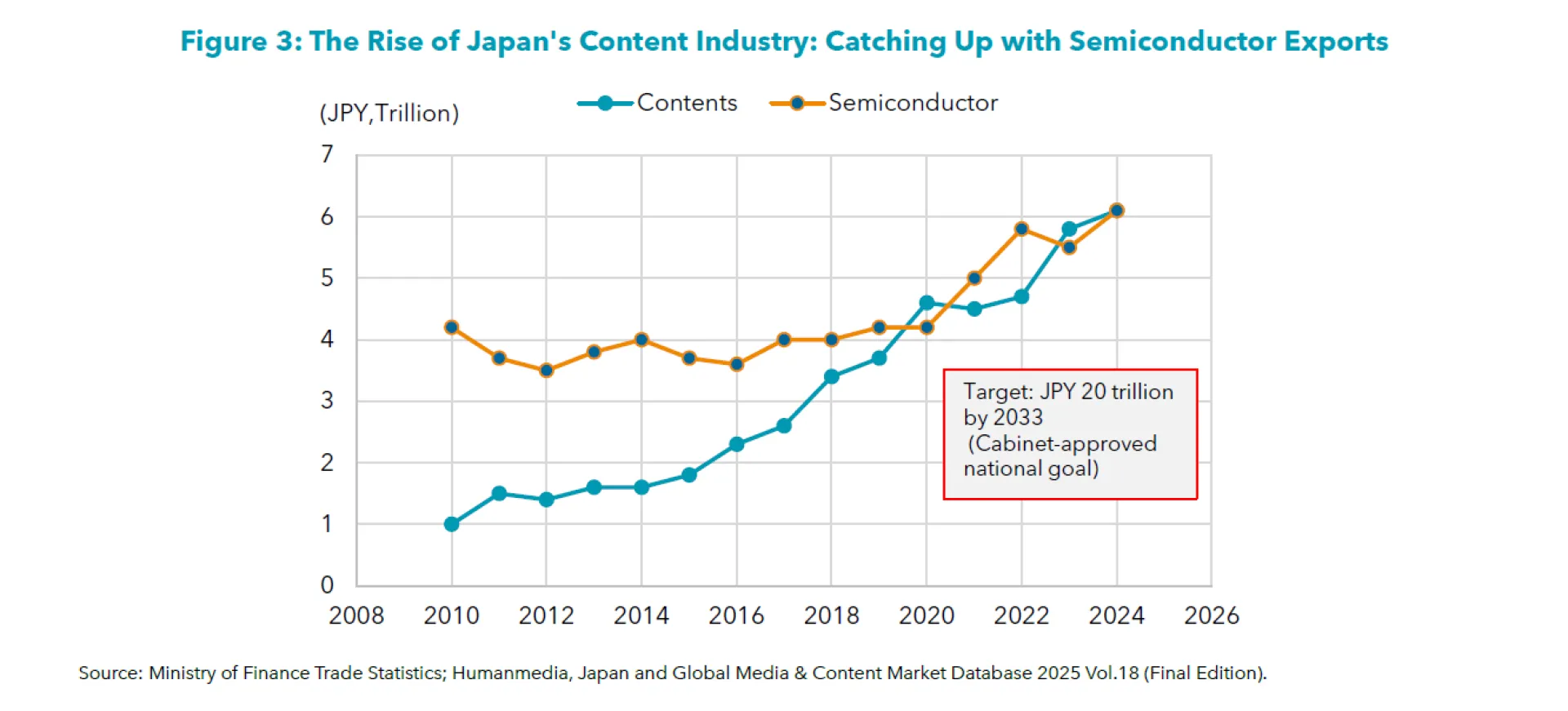
*Content industry figures include overseas sales from Japan's music industry.
—Investors often worry about buying into overhyped themes. How do you distinguish genuine long-term winners from companies simply benefiting from market enthusiasm?
An attractive growth theme does not necessarily translate into an attractive investment. Even when an industry is expanding rapidly, not every company involved will be able to capture the economic benefits.
We use structural themes as a starting point to identify potential investment opportunities, narrowing our focus to approximately 120 investment candidates.
However, our ultimate focus is on each company’s competitive position, its ability to generate sustainable earnings growth and whether that potential is adequately reflected in its valuation.
For example, within the AI supply chain, companies exposed to the same growth trend may have very different earnings prospects. Those facing intense price competition may struggle to translate higher demand into profits, whereas companies with technological advantages and high barriers to entry may be better positioned to capture value.
The same principle applies to Japan’s content industry. We distinguish between companies that depend on occasional blockbuster successes and those capable of consistently developing and monetising strong IP.
For us, the key is not simply identifying where growth is taking place, but understanding which companies are best positioned to turn that growth into sustainable profits.
However, even an outstanding company does not automatically represent an attractive investment opportunity. When market expectations become excessively optimistic and future growth is already fully reflected in the share price, the scope for attractive investment returns may be limited. For this reason, we focus not only on a company's competitive strengths and growth prospects, but also on whether those qualities are appropriately reflected in its valuation.
Step 3: How SuMi TRUST AM Identifies Winners
— SuMi TRUST AM has a large research platform, with around 20 analysts covering Japanese equities. What differentiates your research approach?
With one of the largest research teams in the industry, we cover approximately 90% of the Japanese equity market by market capitalisation. However, the value of our research lies not simply in the breadth of coverage, but in our ability to connect information across companies, industries and supply chains.
This broad perspective allows us to identify relationships and changes that may not be apparent when analysing individual companies in isolation.
Equally important is the continuity of our research. We engage with companies over the long term, not only when performance is strong but also when they face difficulties. By observing how management teams respond to changing circumstances, we seek to identify early signs of improvement or deterioration in their competitive positions.
We believe that the value of active research lies in recognising changes in corporate value that may not yet be fully reflected in financial results or market expectations.
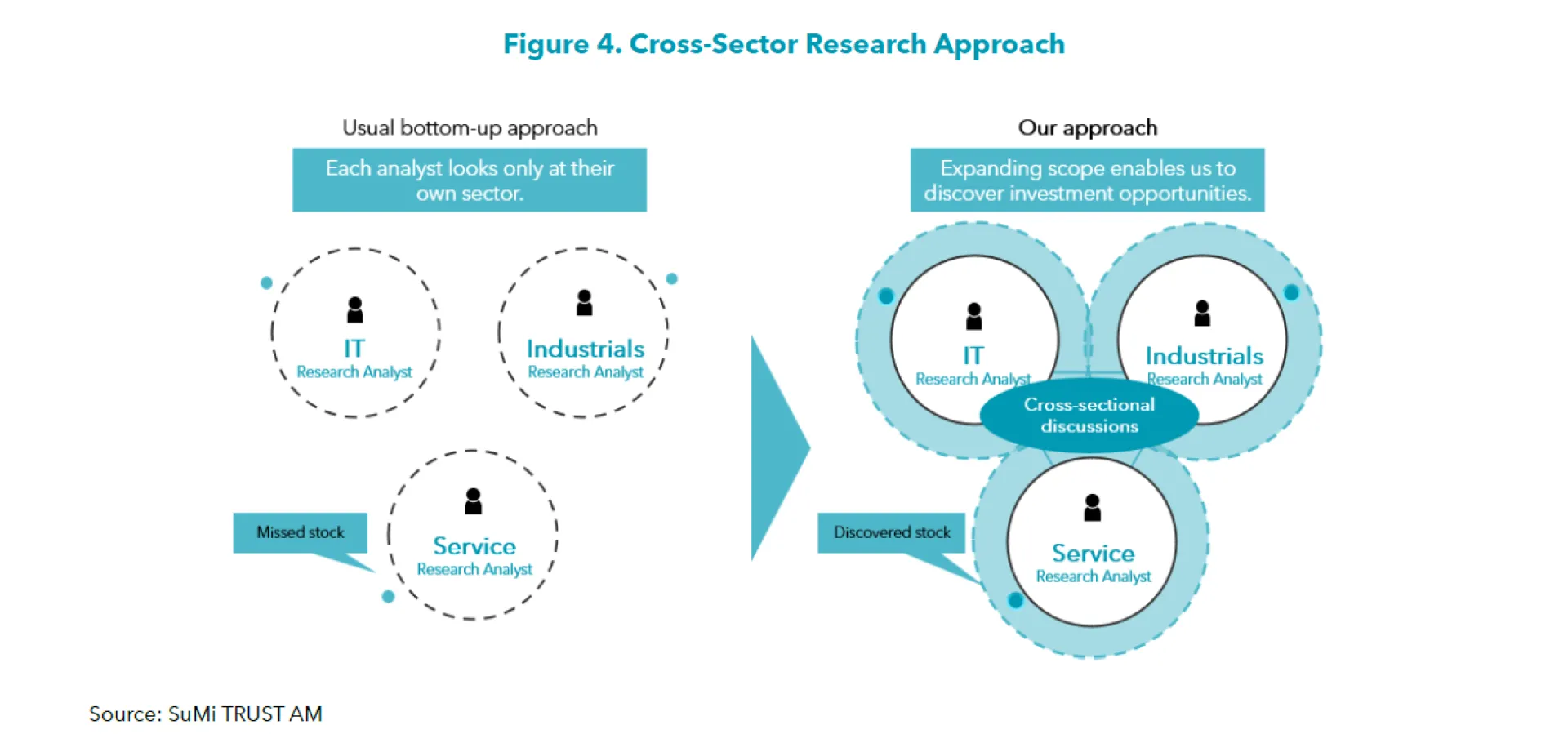
— How does your cross-sector research approach help identify investment opportunities, and how are these insights shared between analysts and portfolio managers?
Our cross-sector approach enables us to assess changes in a company’s competitive position from multiple perspectives, drawing on insights from across industries and supply chains.
This collaboration takes place in two principal ways.
The first is through regular discussions focused on specific investment themes and analytical topics. Analysts and portfolio managers revisit key metrics and developments, typically on a monthly basis, to understand how industry dynamics and corporate competitiveness are evolving. Bringing together analysts from different sectors allows us to challenge assumptions and identify connections that might otherwise be overlooked.
The second is through more agile discussions in response to structural changes. When significant developments occur, such as shifts in energy policy, increasing defence-related demand or advances in artificial intelligence, relevant analysts and portfolio managers come together to assess their implications.
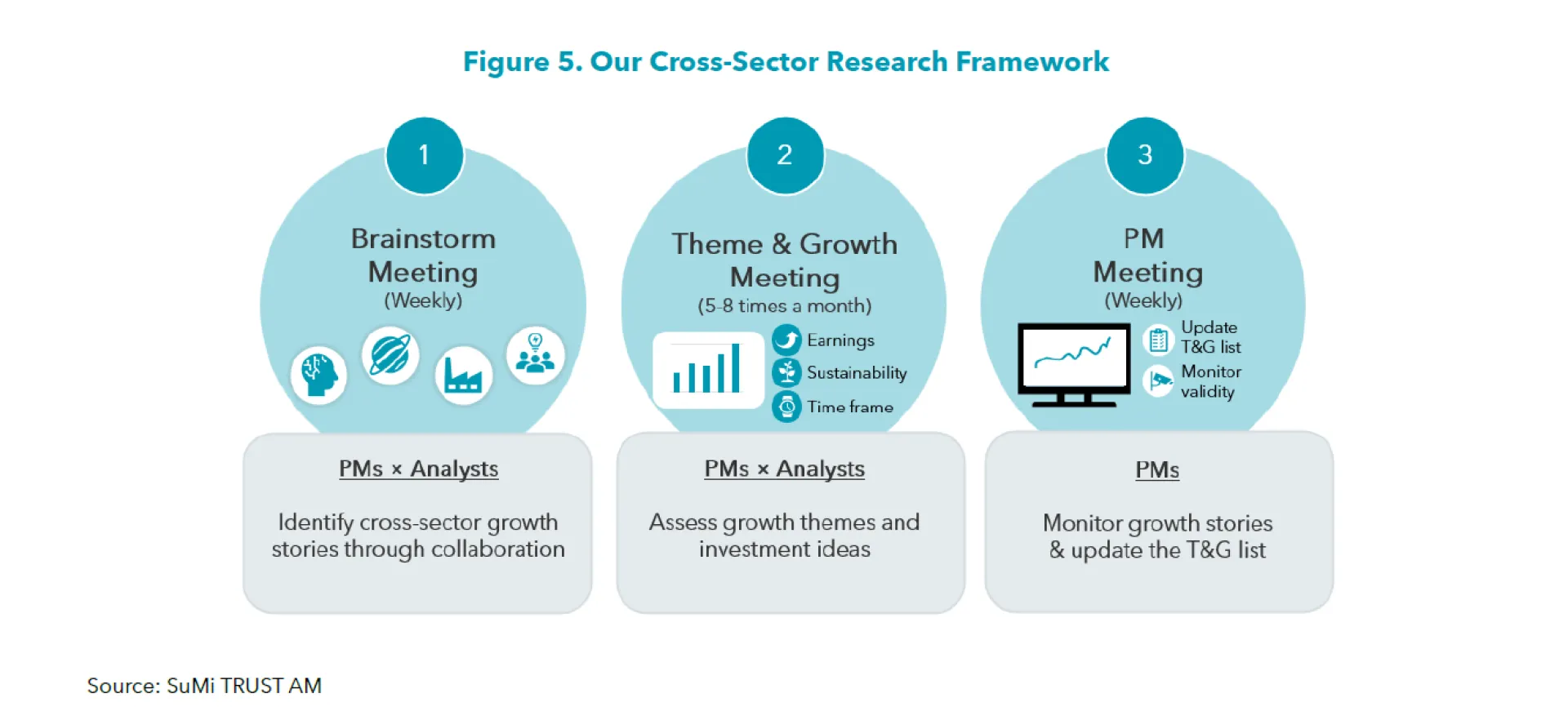
The objective is not simply to recognise that change is taking place, but to understand how individual companies are responding and whether those responses can translate into sustainable earnings growth.
For example, when analysing the electric vehicle (EV) market, our research extends beyond automobile manufacturers to battery materials and production equipment suppliers. By comparing information from different parts of the supply chain, we can test investment hypotheses from multiple perspectives and develop a more comprehensive understanding of the industry’s direction.
Ultimately, combining analysts’ company-specific expertise with portfolio managers’ broader investment perspective helps us make better-informed decisions.
— Beyond financial information, how important are management dialogue, supply chain analysis and other forms of non-financial research in your investment process?
Non-financial information is an essential part of our research process because changes in a company’s competitive position do not always appear immediately in its financial results.
For example, when analysing a retail company, our analysts may visit stores to observe product displays and consumer behaviour firsthand. Even the placement of beer brands in a convenience store can offer insights into suppliers’ sales strategies and commercial relationships.
Dialogue with companies is equally important. Discussions with management and investor relations professionals, particularly those with operational experience in procurement or manufacturing, can help us better understand production processes, business strategies and competitive dynamics.
Importantly, we do not view these observations in isolation. We compare them with financial data, information from other companies and insights from our analysts across different sectors to assess whether they point to a meaningful change in a company’s earnings outlook.
By combining financial and non-financial information, we seek to develop a more complete picture of a company’s competitive position and future potential.

— How do these research insights translate into portfolio decisions, and what typically causes you to change your mind about a stock?
Identifying an attractive company is only part of the investment process. Portfolio managers must also consider its valuation, its relative attractiveness compared with existing holdings and its contribution to the portfolio’s overall risk-return characteristics.
Our investment decisions are driven primarily by changes in the investment thesis rather than short-term share price movements.
Through regular investment discussions and weekly portfolio manager meetings, we continuously review our assumptions about companies’ competitive advantages, earnings prospects and valuations.
If a company’s competitive position deteriorates, its expected profit growth changes, or its future potential becomes fully reflected in the share price, we may reduce or exit the position. Equally, we may adjust our holdings when we identify a more attractive investment opportunity elsewhere. This ongoing collaboration between analysts and portfolio managers enables us to reassess investment hypotheses as new information emerges and reflect those assessments in portfolio construction.
Step 4: The Value of Active Management
— Investment styles are often categorised as either value or growth. How would you describe the philosophy behind your investment strategy?
We do not make investment decisions simply on the basis of whether a stock is classified as value or growth.
Our primary focus is on whether a company can generate sustainable earnings growth over time, supported by a durable competitive advantage.
We also consider whether that growth potential is appropriately reflected in the company’s valuation. Even an excellent business may not represent an attractive investment if expectations are already too high.
As a result of our emphasis on earnings growth, the portfolio tends to exhibit growth characteristics. However, our approach is fundamentally driven by company-specific research and investment opportunities rather than style labels.
Our investment opportunities are not limited to companies traditionally classified as growth stocks. We also look for businesses where corporate restructuring, improved capital efficiency or changes in competitive positioning could unlock value that has not yet been fully recognised by the market.
— Looking ahead, why do you believe active management could become increasingly relevant in the Japanese equity market?
We believe there is still considerable scope for Japanese companies to improve capital efficiency, invest in human capital, enhance productivity and reform their business portfolios.
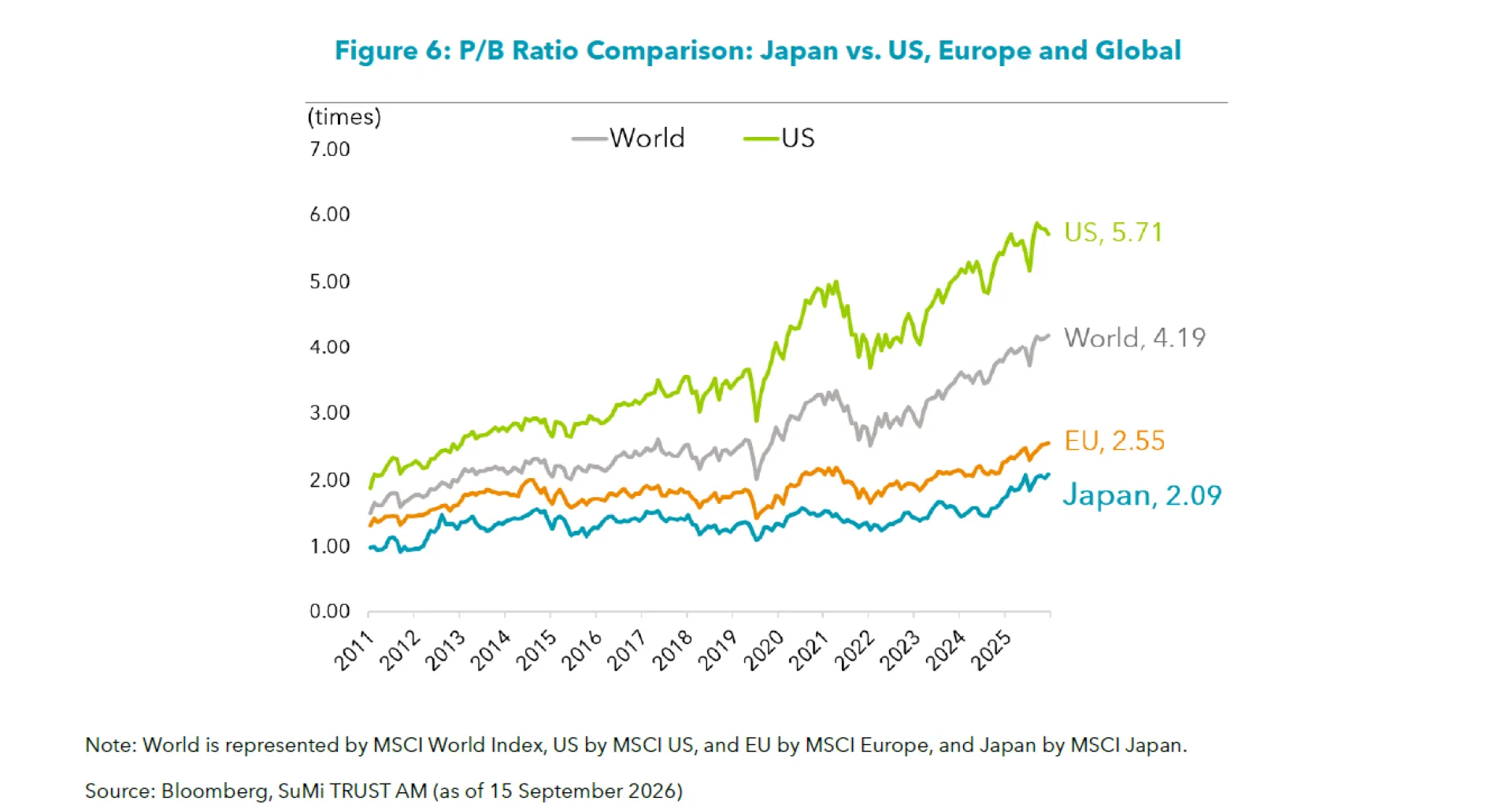
As corporate transformation progresses, we expect greater differentiation in how companies allocate capital, strengthen their competitive positions and translate growth opportunities into earnings.
Importantly, these differences may not be immediately reflected in market valuations. This creates opportunities for active managers with the research capabilities to identify changes in corporate fundamentals ahead of broader market recognition.
Index funds provide efficient exposure to the market as a whole, but they also hold companies with very different long-term prospects.
The role of active management, in our view, is to identify companies where our research reveals a meaningful gap between fundamental value and market expectations. Through continuous research and disciplined stock selection, we seek to translate these insights into investment decisions and generate long-term returns for our investors.
— Finally, drawing on your nearly 30 years of investment experience, what excites you most about the future of the Japanese equity market?
Having been involved in Japanese equity management for nearly 30 years, I cannot recall a time when changes within Japanese companies have felt as tangible as they do today.
In the past, much of the discussion centred on whether investors should invest in Japanese equities at all. Today, the more interesting question is which Japanese companies will emerge as the winners.
As management mindsets change, capital allocation becomes more disciplined and companies pursue new opportunities for growth, I believe we will see a significant transformation in how corporate value is created.
What excites me most is the emergence of new winners, including companies whose potential may not yet be fully recognised by the market.
Our role as active managers is to identify these changes early, understand which companies can turn them into sustainable earnings growth and seek to translate those insights into long-term returns for our investors.